How to start investing in South Africa as a beginner
A practical first guide for someone who wants to move from curiosity to a sensible investing routine.
Introduction
Starting to invest can feel bigger than it needs to. Many South Africans know they should probably do something with their money beyond leaving everything in a normal bank account, but the next step feels blurry. Shares, ETFs, brokers, tax-free accounts, retirement products, and market headlines all arrive at once.
A better way to begin is slowly and clearly. You do not need to become a trader. You do not need to pick a winning stock this week. You need a basic process that helps you understand why you are investing, what kind of risk you can handle, and what tool fits that goal.
Why this matters
Doing nothing with your money has a cost too. Inflation erodes spending power over time, which means the same amount of cash buys less in future. That does not mean every rand should go into shares, but it does mean long-term money often needs a plan.
The earlier you learn the basics, the more time you have to build good habits. For beginners, that habit matters more than trying to look clever. A simple monthly process usually beats emotional decision-making.
Want help choosing what to track first? Join the Rand Pulse waitlist and start with 3 free tracked stocks when we launch.
Join the waitlistWhat investing actually means
Investing means putting money into assets that you expect to grow in value, produce income, or both over time. In South Africa, common starting points include South African-listed shares, exchange-traded funds, unit trusts, retirement products, and tax-free savings accounts.
Different assets play different roles. Shares can offer growth but move around a lot. ETFs can spread risk across many companies. Cash and money-market products are steadier but often grow more slowly. Good beginner investing is usually less about finding one perfect asset and more about matching the tool to the job.
South African context beginners should know
South African investors do not invest in a vacuum. Local interest rates, inflation, load-shedding risk, consumer pressure, banks, mining companies, and the rand all influence what happens on the South African market. Some large companies also earn money offshore, which means global events matter too.
That mix can be confusing at first, but it is also why research matters. A local bank, a miner, a retailer, and a global-feeder ETF do not carry the same risks. Understanding that difference is more useful than memorising market jargon.
A practical beginner example
Imagine a 27-year-old in Johannesburg who wants to start investing R1,500 a month for ten years. They do not need to become a stock picker on day one. A sensible first step might be deciding how much stays in emergency savings, how much can go into a longer-term investment account, and whether broad exposure through an ETF makes more sense than choosing a handful of shares immediately.
That example matters because it shows what real beginner decisions look like. The hard part is rarely choosing between ten advanced products. The hard part is deciding what the money is for, how regular the contribution can be, and whether the investor can stay calm if markets fall for a few months.
Common mistakes beginners make
A lot of beginners start by asking what to buy before asking what the money is for. That can lead to taking too much risk with money that may be needed soon. Another common mistake is confusing a stock tip with a plan. A name that worked for someone else may be completely wrong for your income, time horizon, or stress tolerance.
Fees are another blind spot. Platform costs, trading fees, and product fees can quietly drag on long-term results. It is also common to overestimate how much volatility feels acceptable until the portfolio is actually down. Starting with an amount you can stick with matters more than starting with an impressive number.
How Rand Pulse helps
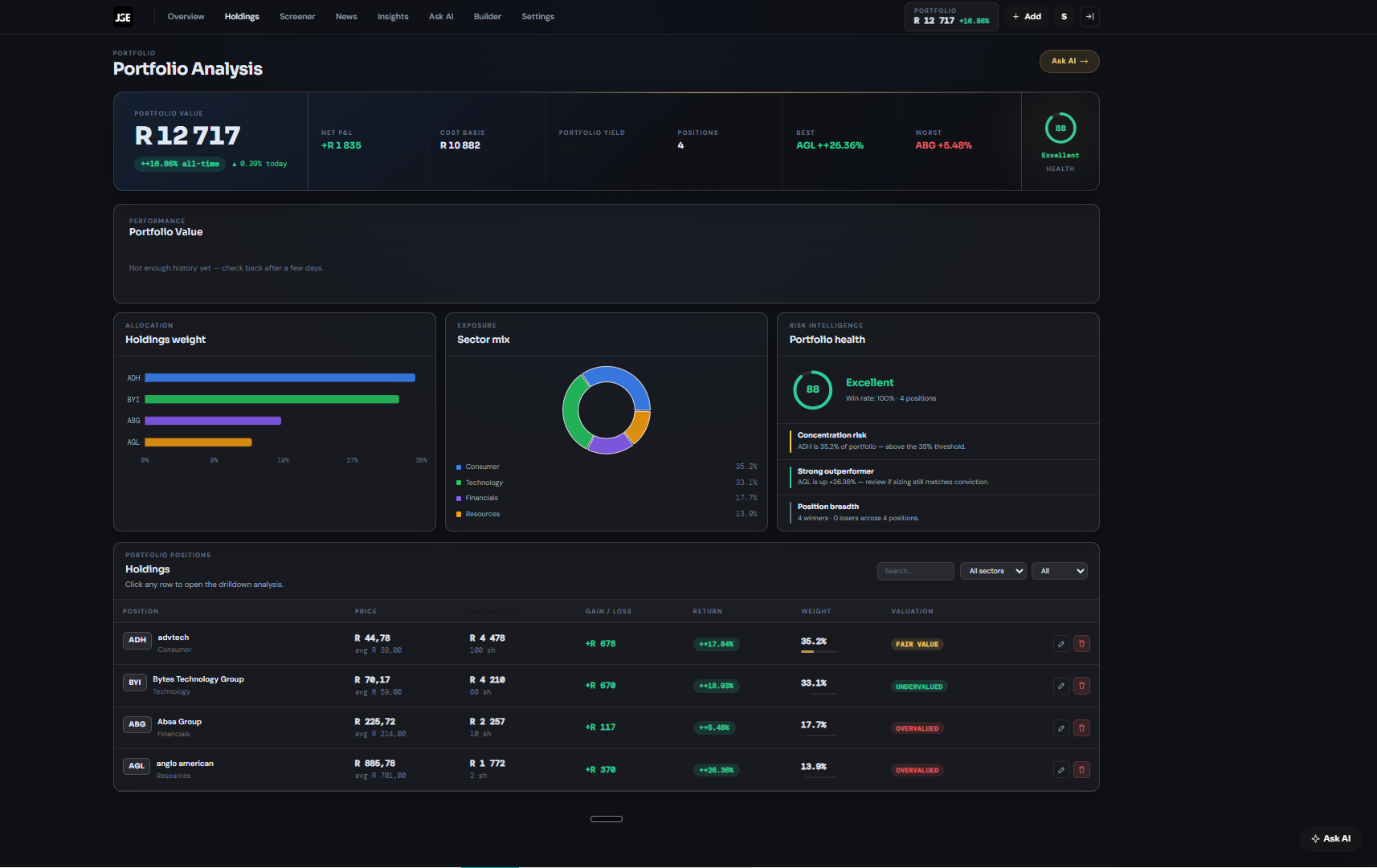
Rand Pulse is designed to turn vague beginner questions into something concrete. You can use the Portfolio Builder to see how your budget, time horizon, and risk tolerance affect a starting plan. You can use the Screener to compare South African shares without needing five tabs open and a spreadsheet on the side.
If you want a gentler starting point, the free plan is designed around up to 3 tracked stocks so you can learn how monitoring works without committing to a full active portfolio. Premium is better suited to investors who want unlimited tracking, deeper AI analysis, and full portfolio tooling.
Key takeaways
Starting well matters more than starting perfectly. Define the goal, separate short-term money from long-term money, understand the risks, and begin with an amount you can actually repeat.
This content is educational and not financial advice. The most useful beginner habit is building a process you understand, then improving it over time.
- Start with your goal before choosing a product.
- Use simple tools you can explain back to yourself.
- Track costs, risk, and consistency from the start.
- Review your plan on a schedule instead of reacting to headlines.
Next step
Get early access to the beginner toolkit
Use Rand Pulse to track up to 3 stocks on the free plan, compare South African listings in the Screener, and unlock the Portfolio Builder with premium access.
Get started free
Start investing with clarity
Create a free account to access beginner-friendly South African share research, portfolio tools, and Shariah-aware screening. The free plan includes up to 3 tracked stocks — premium unlocks unlimited tracking, advanced AI analysis, and full portfolio tools.