Common mistakes new South African investors make
A practical guide to avoidable habits that often hurt beginners more than the market itself.
Introduction
Most beginner mistakes are not mysterious. They happen because people move too fast, confuse excitement with research, or copy someone else’s conviction without understanding the risk.
That is good news in one sense: avoidable mistakes can be reduced with a clearer process. You do not need perfect market timing to improve. You need better habits.
Why this matters
A few early mistakes can shape how someone feels about investing for years. If your first experience is driven by tips, panic selling, or overcommitting money you needed, the lesson may feel like investing itself is the problem.
Usually the problem is not the idea of investing. It is the lack of structure around it.
Start with 3 free tracked stocks when we launch and build better investing habits from the beginning.
Join the waitlistA simple explanation
Beginner mistakes usually fall into a few buckets: poor risk sizing, weak research, emotional decision-making, unclear goals, and ignoring costs. They are often connected. If the goal is vague, the product choice becomes vague too. If the research is weak, emotion takes over when prices move.
The solution is not a genius move. It is a repeatable routine: define the goal, research the asset, check the risk, document the reason, and review on a schedule.
South African context
South African investors face local pressures that can make mistakes easier to slip into. High living costs, variable disposable income, local market concentration, and strong reactions to rates or the rand can all make short-term decisions feel urgent.
That makes discipline even more important. A good process helps you separate real investing decisions from stress-driven reactions.
A practical beginner example
A beginner hears that a certain South African stock has dropped sharply and might bounce. They buy without checking debt, valuation, or how the business actually makes money. When the share keeps falling, they sell in frustration and conclude investing is too risky.
In that example, the real issue was not only the stock. It was the missing process around the decision.
Common mistakes to watch for
Chasing tips is the obvious one, but there are others: overcommitting money needed soon, ignoring fees, skipping diversification, failing to write down the reason for a trade, and confusing a lower share price with better value.
Beginners also often upgrade complexity too quickly. More stocks and more information are not automatically better if they reduce understanding.
- Do not invest money needed for near-term essentials.
- Do not let one idea dominate your portfolio too early.
- Do not confuse market noise with a real thesis change.
- Do not add positions you cannot explain back to yourself.
How Rand Pulse helps
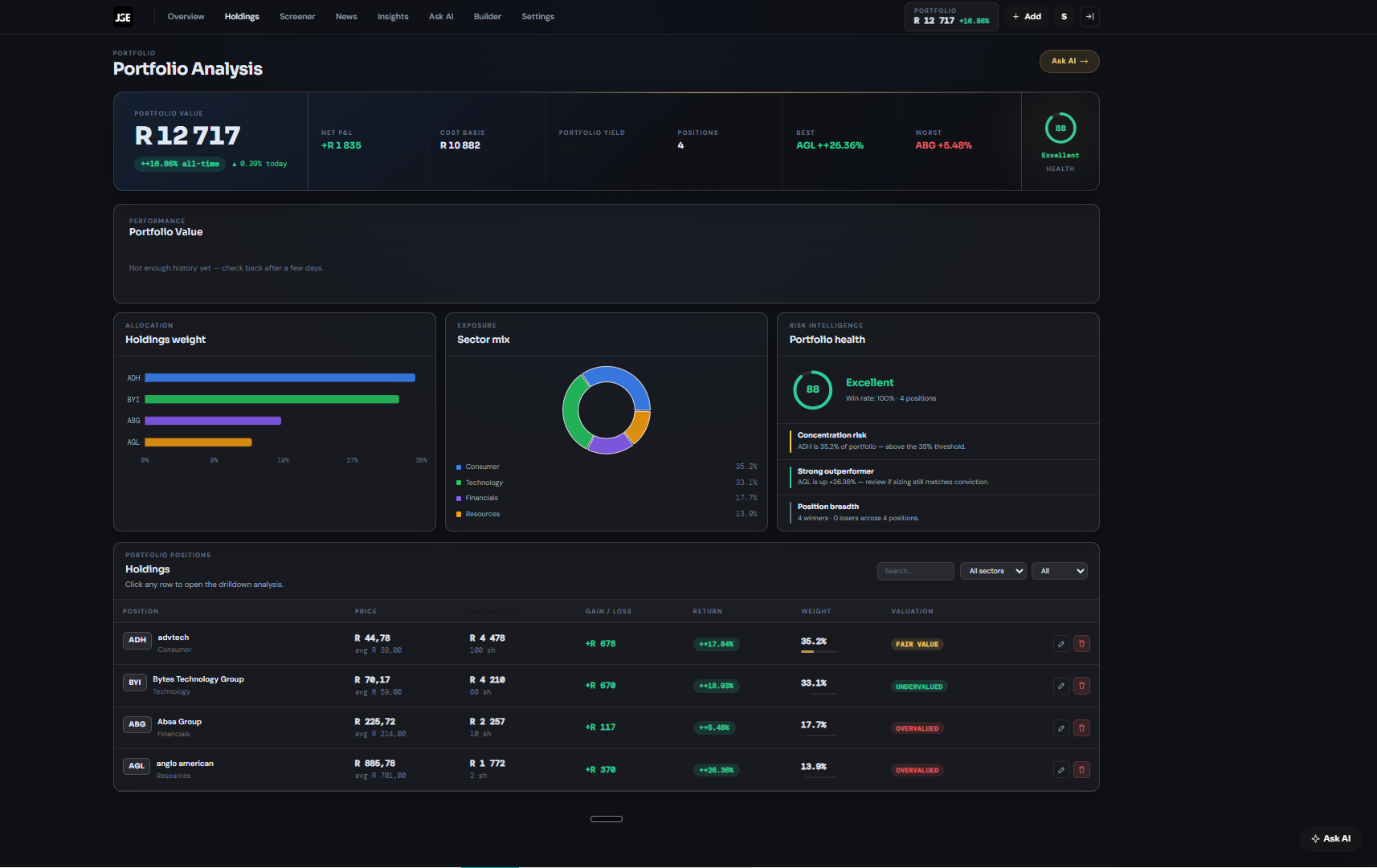
Rand Pulse helps by encouraging a more structured research workflow. The Screener helps you compare names instead of reacting to a single story. The stock pages help you review risk and fundamentals in one place. The Portfolio Builder helps if your real problem is not stock selection but building a sensible starting structure.
The free plan keeps things simple with up to 3 tracked stocks. Premium adds unlimited tracking, advanced AI analysis, and deeper portfolio tools once you are ready for a broader workflow.
Key takeaways
Most beginner investing mistakes come from moving too fast or thinking too vaguely. Better habits usually matter more than better hot takes.
This content is educational and not financial advice. A written process is one of the best protections a beginner can build.
Next step
Replace panic with process
Use Rand Pulse to track 3 stocks for free, compare ideas in the Screener, and unlock advanced AI analysis and portfolio tools with premium access.
Get started free
Start investing with clarity
Create a free account to access beginner-friendly South African share research, portfolio tools, and Shariah-aware screening. The free plan includes up to 3 tracked stocks — premium unlocks unlimited tracking, advanced AI analysis, and full portfolio tools.