How to build a simple investment portfolio
A beginner-friendly framework for combining exposure, risk control, and long-term consistency.
Introduction
A simple investment portfolio is not a lazy portfolio. It is a portfolio with a clear purpose, understandable parts, and enough structure to survive real life. Beginners often think a good portfolio must look sophisticated. Usually, it just needs to be coherent.
The job of a portfolio is to help your money work toward a goal while keeping risk at a level you can live with.
Why this matters
Without a portfolio framework, beginners often collect random holdings. One share comes from a tip, another from a news story, another because the price dropped. That can create a mix of positions with no clear role, no weighting logic, and no review discipline.
A simple portfolio solves that by asking what each holding is meant to do and how much room it should take up.
Use the Portfolio Builder to see how this applies to you.
Get builder accessA simple explanation
A portfolio is a set of holdings working together. Some holdings may be there for broad exposure, some for income, some for higher-growth potential, and some for diversification. Simplicity comes from assigning jobs clearly.
The exact mix can vary, but the structure should make sense to you. If you cannot explain why a holding is there, you probably do not need it yet.
South African context
For South African investors, a simple portfolio often needs to think about local concentration. If your income, spending, and savings are already exposed to the local economy, your investments may need a bit more balance than you first assume.
Local sector concentration matters too. A group of financial shares can look diversified on paper but still move together when rates or credit risk change.
A practical beginner example
A beginner portfolio might start with a broad core, then add one or two more specific holdings only when there is a clear reason. That keeps the research burden manageable and makes reviews easier.
Another beginner might decide not to add individual shares yet and use the first few months just to understand allocation, contribution habits, and risk. That is still real progress.
Common mistakes
The most common mistake is building a portfolio by accumulation instead of design. Another is letting one position become too large because it happened to go up or because the investor felt especially confident in the story.
Beginners also underestimate reviewability. A portfolio you cannot explain six months later is harder to manage well.
How Rand Pulse helps
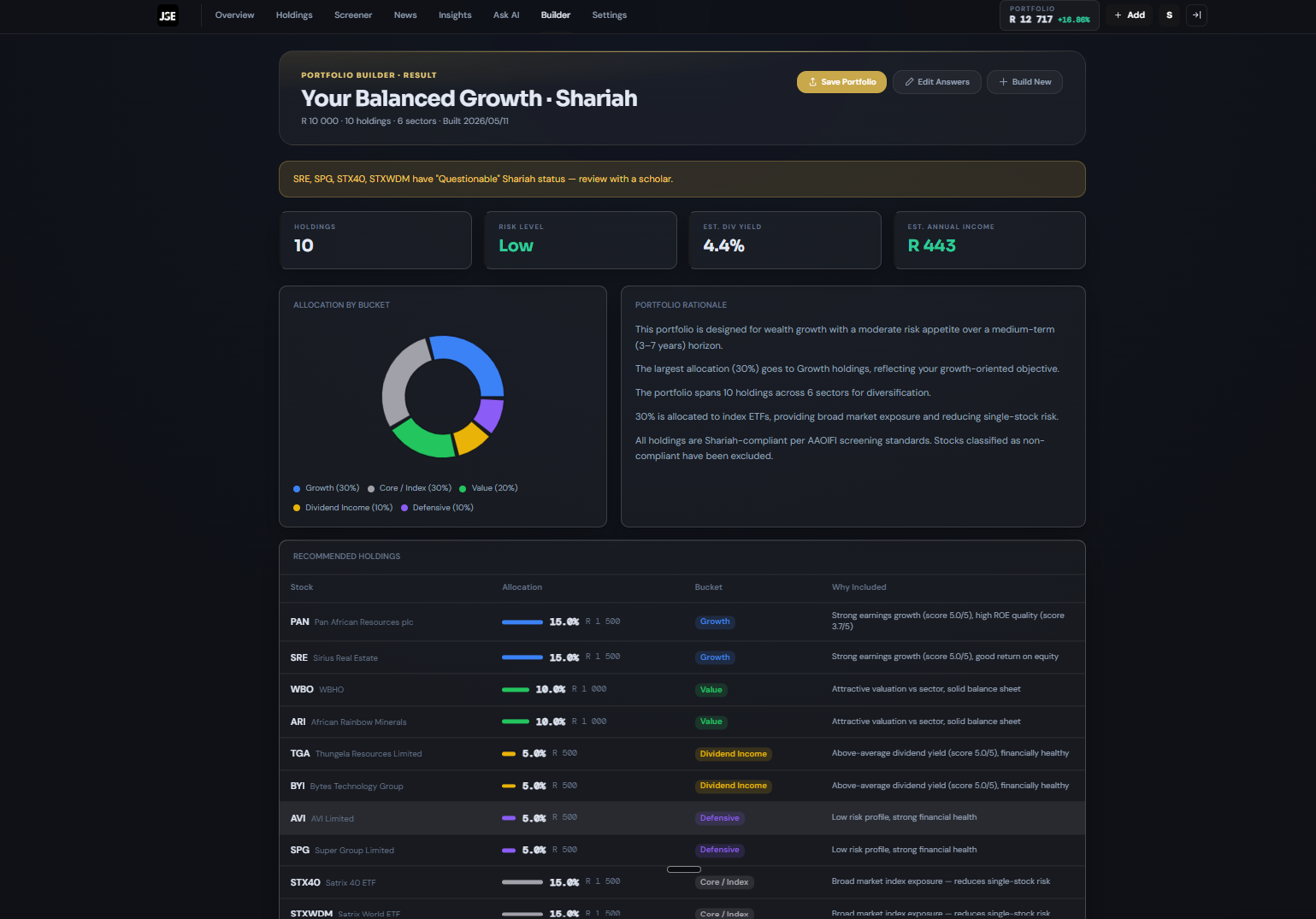
This is one of the clearest use cases for Rand Pulse. The Portfolio Builder helps you turn a goal, risk level, and time horizon into a starting structure. The holdings tools help you see concentration, allocation, and performance in one place.
The free plan gives you a simple on-ramp with up to 3 tracked stocks. Premium unlocks unlimited tracking, advanced AI analysis, and the fuller portfolio workflow once your setup becomes more active.
Key takeaways
A simple portfolio should be understandable, balanced, and easy to review. Complexity is not the same thing as quality. Clear roles and sensible weights matter more.
This content is educational and not financial advice. The best beginner portfolio is one you can explain, maintain, and improve over time.
Next step
Build a portfolio you can actually maintain
Rand Pulse helps you move from vague portfolio ideas to tracked holdings, clearer allocations, and premium portfolio tools when you are ready.
Get started free
Start investing with clarity
Create a free account to access beginner-friendly South African share research, portfolio tools, and Shariah-aware screening. The free plan includes up to 3 tracked stocks — premium unlocks unlimited tracking, advanced AI analysis, and full portfolio tools.