ETFs vs individual stocks in South Africa
A practical comparison for South Africans deciding whether they want broad exposure, stock-by-stock research, or a mix.
Introduction
One of the most useful early investing questions is whether you want broad exposure through ETFs, direct ownership through individual shares, or a combination of both. Beginners often assume they must choose one camp permanently. In practice, the decision is more flexible than that.
What matters most is understanding the trade-off between simplicity, diversification, control, and research effort.
Why this matters
The ETF-versus-stocks decision shapes how much research you need to do, how concentrated your portfolio becomes, and how likely you are to stay with your plan during market noise.
If you choose a structure that is too complex too early, you may spend more time feeling uncertain than learning productively.
Get early access to the Portfolio Builder if you want help turning this ETF-versus-stocks question into a real plan.
Get builder accessA simple explanation of ETFs
An ETF is a listed fund that usually tracks an index or basket. That could be the SA Top 40, a global equity index, a property basket, or another group of assets. Buying one ETF can give exposure to many underlying holdings at once.
That makes ETFs appealing for beginners because diversification is built in. You are not depending on one company to carry the whole result.
South African context
South African investors often face another layer: local concentration. If your job, income, and spending are already tied to the local economy, a purely local portfolio may carry more South Africa-specific risk than you realise. ETFs can sometimes help broaden exposure, but the actual holdings still matter.
This is also why South African-listed ETFs, offshore-feeder products, and local shares should be compared by what they really hold, not only by their labels.
A practical beginner example
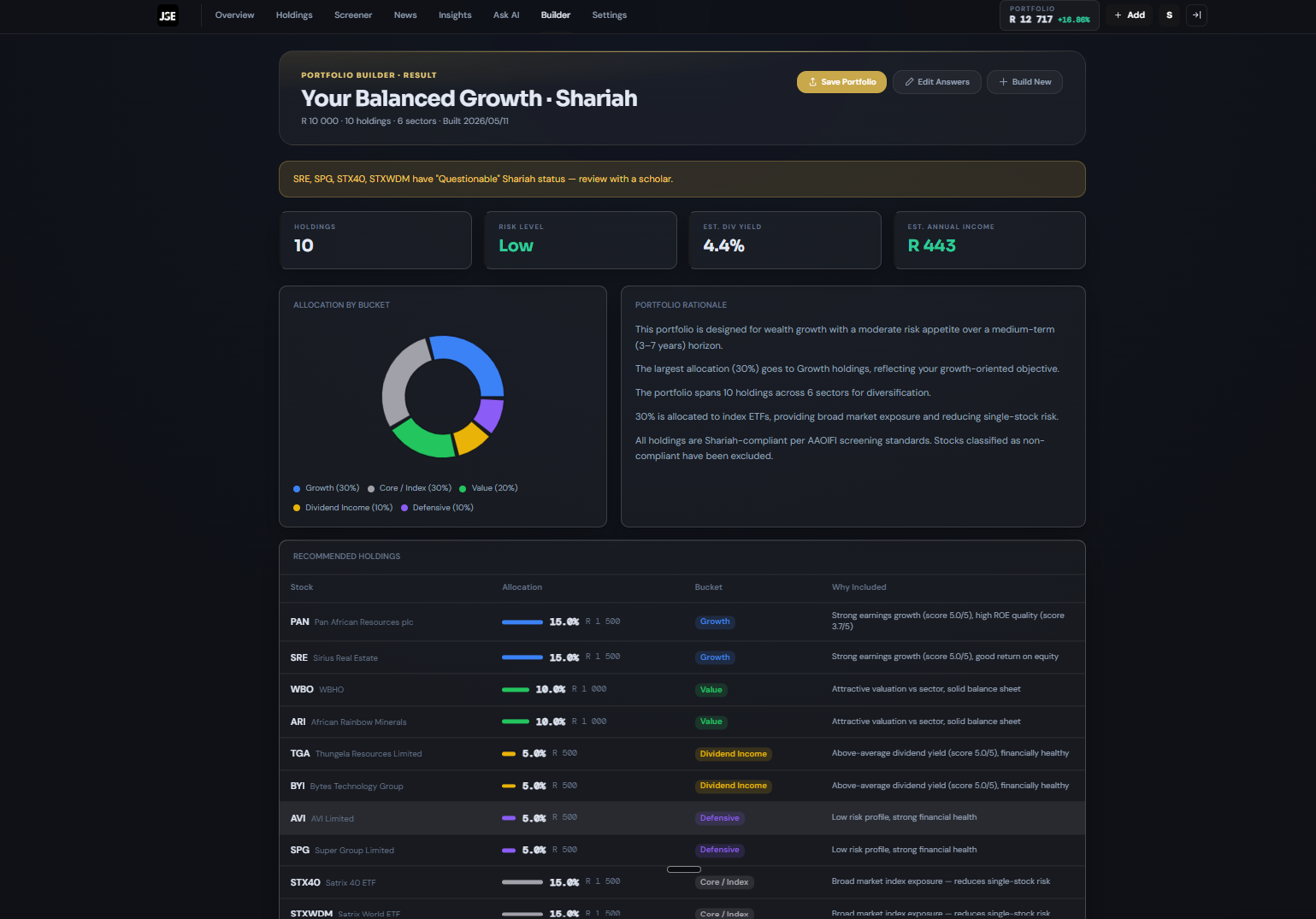
A beginner might decide to use a broad ETF as a core position and keep one or two individual South African shares on a watchlist or in smaller positions for learning. That gives room to study businesses while keeping the overall portfolio from becoming one giant bet.
Another beginner may realise they do not yet enjoy company research and prefer broad exposure for now. That is a valid choice too.
Common mistakes
A frequent mistake is assuming an ETF means no research is needed. You still need to know what it tracks, what the costs are, and what kind of risk you are buying. Another mistake is building a stock portfolio with too many names too quickly just to feel diversified.
Beginners also sometimes treat ETF investing as boring and stock picking as serious. In reality, both can be useful tools. The better choice is the one that fits your current level of understanding and your long-term plan.
How Rand Pulse helps
Rand Pulse helps with both paths. The Screener and stock pages are useful if you want to compare individual South African listings carefully. The Portfolio Builder is useful if you want to think in terms of allocation and balance rather than only picking tickers one by one.
The free plan gives you a lightweight way to track up to 3 stocks while you decide how hands-on you want to be. Premium adds unlimited tracking, deeper AI research, and full portfolio tools once you are ready to manage more complexity.
Key takeaways
ETFs and individual shares solve different problems. ETFs can help with diversification and simplicity. Individual shares can help with control and deeper conviction, but they demand more research.
This content is educational and not financial advice. The best starting structure is one you understand well enough to stick with.
Next step
See how your mix could look
Track up to 3 stocks on the free plan, compare ideas in the Screener, and use premium to unlock unlimited tracking and full portfolio tools.
Get started free
Start investing with clarity
Create a free account to access beginner-friendly South African share research, portfolio tools, and Shariah-aware screening. The free plan includes up to 3 tracked stocks — premium unlocks unlimited tracking, advanced AI analysis, and full portfolio tools.